Dream Home Network
Modernizing a legacy real estate brand across six platforms at once
Most multi-brand design projects mean starting over multiple times. This one asked a different question: could one design system do the work of six without any of them feeling generic? We built the answer: a shared foundation flexible enough to serve each platform's niche while keeping the network coherent and the project scalable.
- Research & Strategy
- Branding
- UX/UI Design
- B2B Experience Design
Background
When a company gets acquired, one of the hardest questions to answer is: what do you keep? Dream Home Network had spent more than 20 years building brand recognition and search authority across several real estate platforms serving buyers with a specific dream already in mind. That focus built a loyal audience — and a brand worth protecting.
New ownership came in with a clear mandate: modernize the brand and design without losing what made the network recognizable. Big Human was brought in to help figure out how.
From The Client
"Taking on a brand with this much history is never a small thing. Big Human understood what we'd built and what it meant to our agents and our buyers, and they brought that same care to every decision. We didn't want to lose what made this recognizable—we wanted to build something that could carry it forward."
Joseph Carter, CEO & Owner, Dream Home Network


Research & Strategy
Understanding a brand built on belonging
Before anything was designed, we conducted discovery interviews to understand how buyers find and engage with the platforms, as well as what agents actually need to manage their listings effectively. The goal was to identify where the existing experience created friction and where there were genuine strengths worth protecting.
That foundation informed every decision that followed: how the brands would relate to one another, how the design system would be structured, and how the platforms would be architected to protect two decades of hard-won SEO value.

Branding
Six identities. One system.
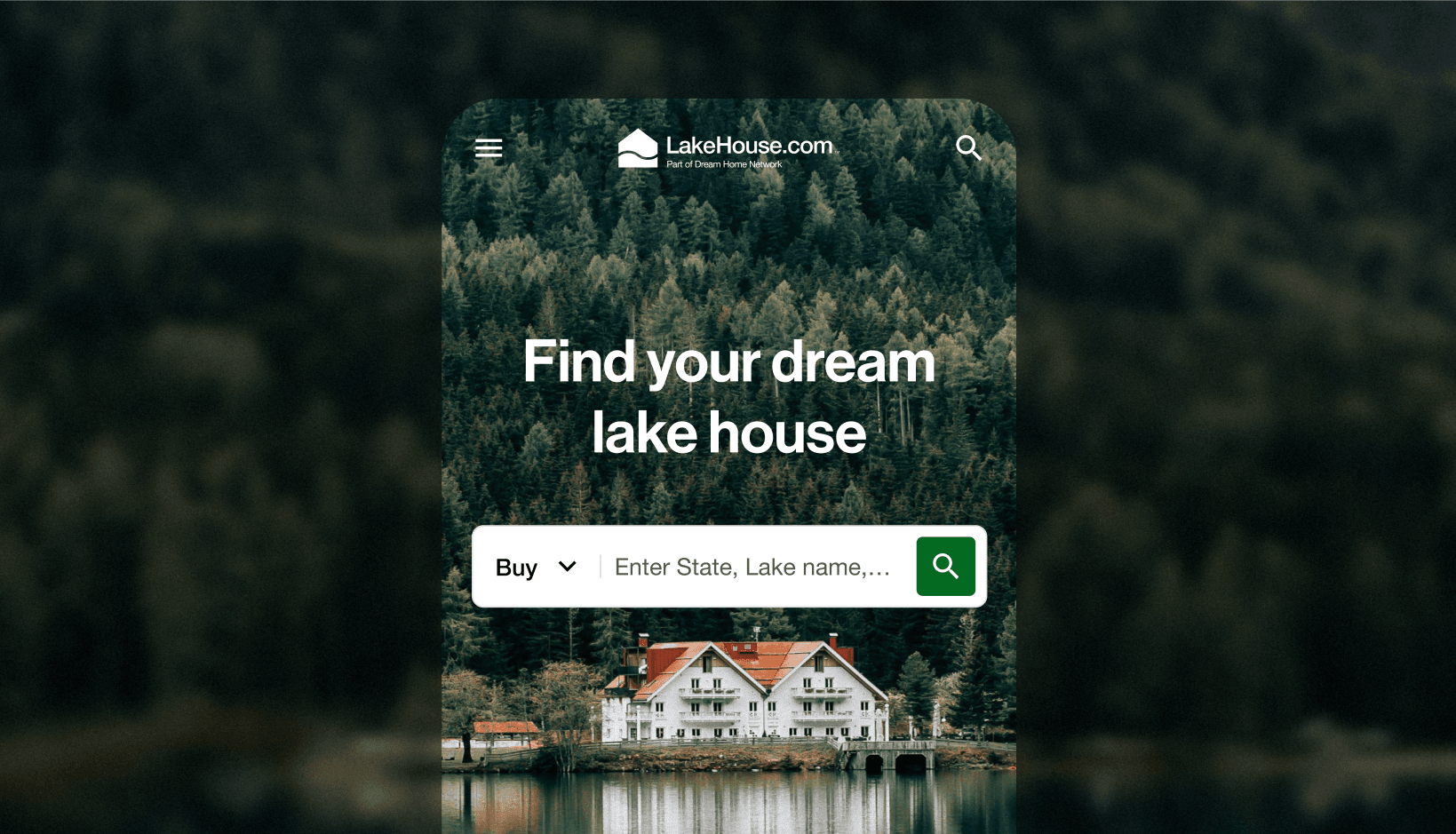
Each website LakeHouse.com, BeachHouse.com, MountainHomes.com, GolfHomes.com & BarrierFreeHome.com, and the soon-to-come HighRiseHomes.com all needed to feel like its own brand while clearly belonging to the same family. We developed a unified visual identity system with a shared typographic foundation and distinct color palettes and iconography for each platform — all designed to work together without feeling generic. The identities were built to travel beyond the web too, working across merchandise, print, and outdoor placements.


UX/UI Design
Built for how buyers actually search for homes
Dream Home Network's buyers aren't filtering by bedroom count. They already know the lake they want to live on or the golf community they've been thinking about for years. We enhanced the search and browsing experience around location and lifestyle, added structured content to support long-term SEO (as well as growth for AI-driven search), and wove in rich lifestyle imagery to sell not just the property, but the life around it.
Because the same template powers all six platforms, every design decision had to work universally. We built with consistency as the default and only departed where a specific niche genuinely required it.


B2B Experience Design
Making the business side work as well as the front end
Dream Home Network offers real estate specialists featured placement across its suite of platforms, helping them reach prospective buyers at scale. The existing agent portal was functional but dated, and it wasn't doing justice to that offering. We redesigned it with the same care as the consumer-facing experience: cleaner layout, better mobile performance, and dedicated agent profile pages that give specialists a polished presence they can actually share with clients.
Results
Five Dream Home Network platforms are live. The brands that spent two decades building recognition in their communities now have a digital presence to match.
For Big Human, this project is a reminder of what's possible when you treat a brand's history as an asset rather than a constraint — and build something new that knows exactly where it came from.