How to Build a Product Roadmap Your Team Will Actually Use
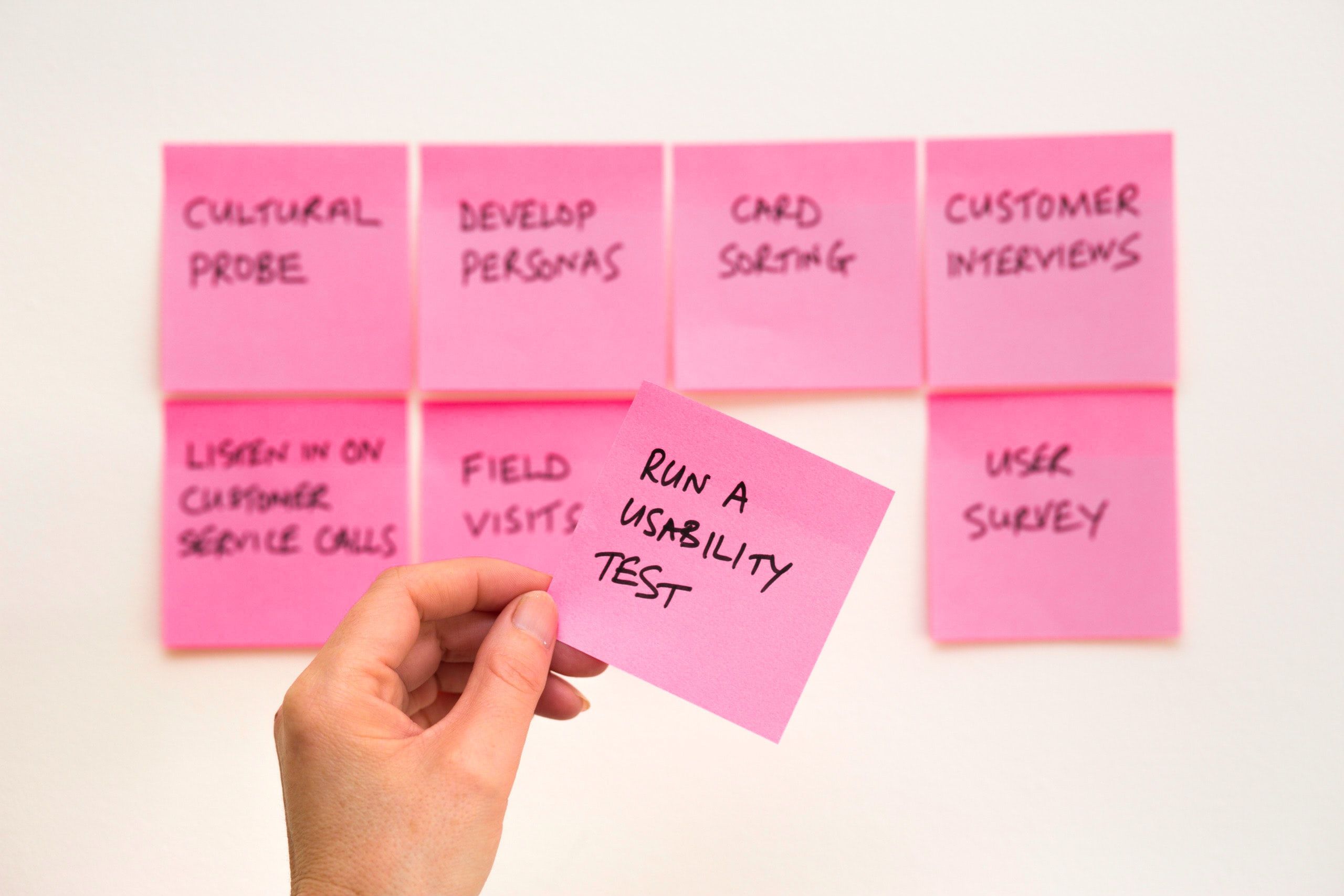
Most product teams build a roadmap. Fewer build one that their team actually refers to six months later. The artifact gets created, gets presented, gets nodded at, and then quietly stops being the thing anyone checks. That's not a documentation problem. It's a strategy problem. A product roadmap that doesn't reflect real priorities, constraints, and a shared product vision isn't a roadmap. It's a wish list with a timeline attached.
At Big Human, we've been building digital products for 15+ years. Product roadmapping sits at the center of almost every engagement we take on, whether we're working with a startup defining its product strategy for the first time or a mid-size company trying to untangle two years of accumulated backlog and competing stakeholder demands. A roadmap that a team actually uses looks very different from one built to satisfy an investor ask or a quarterly review.
This guide covers how to build a product roadmap that earns trust, survives contact with reality, and actually drives what gets built. If you're already past the research phase and want to talk through a specific project, we'd love to chat.
What is a product roadmap?
A product roadmap is a strategic plan of action that outlines what a product team plans to build and why, mapped against time. It connects product vision to execution by showing which features, initiatives, or milestones are coming, in what order, and what goals they're tied to.
The key word is "strategic." It's not a project plan. It doesn't track individual tasks or sprints. It communicates direction. The backlog handles specifics. The roadmap answers the question every stakeholder is really asking: where is this product going, and are we making the right decisions to get there?
Product managers use roadmaps to align teams, communicate progress to stakeholders, and make prioritization decisions visible. A well-built roadmap makes trade-offs legible: when something gets added, it's clear what moved and why.
Most roadmaps also split into two versions: internal roadmaps for the product and engineering team (more granular, includes milestones and sprint-level thinking) and external roadmaps for customers, investors, or sales teams (higher level, focused on outcomes). Both should be grounded in the same product strategy, just pitched at different audiences.
A product roadmap is also distinct from a couple of adjacent artifacts that share ‘roadmap’ in the name name. Technology roadmaps map infrastructure work and technical debt paydown over time. A portfolio roadmap rolls several products' roadmaps into one view for leadership overseeing more than one product line. Same underlying logic, different altitude.
Why do most product roadmaps stop getting used?
The most common failure mode isn't a bad roadmap. It's a roadmap that was built once and then treated as immutable. Most teams treat a product roadmap as a commitment: a contract with leadership or customers about what's getting built. The problem with that framing is that it makes the document brittle. When priorities shift (and they always do), nobody wants to touch it, because doing so feels like admitting failure.
We approach it differently. A product roadmap is a communication tool, not a contract. When it stops reflecting current thinking and starts locking in frozen decisions, it stops doing its job. That means it has to change. The version from six months ago should look meaningfully different from the one the team is using today, and both should be defensible based on what was known at each point. For more on building products through uncertainty, our guide on startup product development covers how this plays out in practice.
The other common failure: roadmaps that don't connect to the product strategy or business strategy behind them. Features get added because someone asked loudly, not because they serve a defined product vision or measurable KPIs. Without that connective tissue, product managers can't say no to anything, and the roadmap becomes a backlog in disguise.
A useful product roadmap has a clear answer to "why does this exist?" for every item on it. Not just what's being built, but what customer need it addresses, what business objective it serves, and how you'll know it worked.
How do you build a product roadmap step by step?
Every product is different, and this process should flex to fit your context. But the core questions stay the same. If you'd rather work through them with a thought partner, reach out to Big Human.
1. Start with product vision, not features
Before any feature goes on the roadmap, you need a defined product vision: a clear statement of what the product is trying to do for whom, and what success looks like. This is the filter every roadmap decision runs through. If you don't have a product vision yet, build one first. It doesn't need to be elaborate. It needs to be specific enough that when two stakeholders disagree about a feature, you can settle the argument by asking which option better serves the vision.
2. Define your time horizons
Roadmaps typically use three time horizons: now (this quarter or current sprint cycle), next (the following quarter or a few months out), and later (everything beyond that). The "now" bucket should be specific: defined milestones, clear epics or user stories, clear owners. The "later" bucket can stay intentionally loose, because appropriate uncertainty about the longer term is honest. Pinning exact features to six or twelve months from now is usually a mistake. That's guessing in calendar form.
3. Gather inputs from the right sources
A roadmap that only reflects what the product team wants to build will be ignored by everyone else. You need structured input from stakeholders: engineering, design, sales, customer success, and actual users.
Customer feedback is non-negotiable. Not anecdote-level ("someone asked for dark mode") but systematic: patterns across support tickets, usage data, and user research sessions. Pair that with a clear picture of what your KPIs are and which product features are expected to move them.
4. Sequence by value and dependency
Once you have a candidate list of initiatives, the question is order. Sequencing by what's most technically feasible isn't the right frame. It produces a plan that's easy to execute but not necessarily the right one. Sequencing by value first means asking which items, when shipped, will most clearly move a metric that matters. Then layer in dependencies and technical debt. Some things can't happen until the infrastructure underneath them exists. That combination usually produces a defensible order.
5. Pressure-test before you lock it
A roadmap is a hypothesis. Before you finalize it, present it to people who will push back. Does engineering see things the product team missed? Do stakeholders understand the trade-offs? Does it hold up when someone asks "why is X before Y?" If it doesn't survive that conversation, it won't survive six months of product development. Better to find out now.
How do you prioritize what goes on the roadmap?
Prioritization is where most product roadmaps break down. Without a clear framework, the process becomes a negotiation: whoever argues most persuasively or holds the most organizational power gets their feature in. Here’s a few of the most popular methods.
RICE scoring
RICE (Reach, Impact, Confidence, Effort) gives every candidate initiative a score. Estimate how many users a feature reaches, how much it impacts them, how confident you are in that estimate, and how much effort it requires. A higher score means higher priority. It's not perfect, but it makes trade-offs explicit and reduces the influence of opinions that aren't grounded in data.
Now / Next / Later
A simpler approach: instead of committing to dates, bucket items by rough proximity. Now is the current sprint cycle. Next is the following one to three months. Later is anything beyond that. This format works well for agile teams because it's honest about uncertainty and easy to update as things change.
Opportunity scoring
Based on customer feedback and user research, identify where users' most important needs are least satisfied. The gap between importance and satisfaction is where roadmap value lives. Big Human's UX/UI design and user research work often surfaces these gaps in the user experience: needs that customers have but haven't been able to articulate directly.
Whichever framework you use, the goal is the same: make the reasoning visible. A stakeholder who disagrees with a prioritization decision should be able to see how it was made, even if they'd weight the inputs differently.
Figuring out what belongs on the roadmap first, and building the case for it, is exactly what our product strategy engagements are built around. Reach out to Big Human and we'll help you get there faster.
What format and tools should you use?
There's no single right format for a product roadmap. The right one depends on who you're building it for and what decisions it needs to support.
Gantt chart
Gantt charts plot initiatives against a timeline with start and end dates. They're familiar and easy to read for non-technical stakeholders. The risk is that they look precise: specific dates imply a level of certainty that usually isn't real early in the product development process. Use a Gantt chart when timelines genuinely matter, such as coordinating around a product launch or an external commitment.
Kanban board / swim lane format
A kanban board or swim lane format organizes work by theme, team, or outcome and shows status rather than dates. It's a better fit for agile teams because it makes the current state of work visible without implying false precision about when things will be done.
Now / Next / Later grid
A simple three-column grid. No dates, just directional commitment. This is the format we often recommend for early-stage products or teams that are still solidifying their strategy. It keeps the plan honest about what's actually known.
Agile roadmaps
These are designed to be updated frequently, often sprint by sprint. They typically use epics and user stories as the organizing unit rather than features or milestones, and they treat the plan as a backlog of intent rather than a fixed commitment. They work well for teams with mature agile practices and short feedback loops.
Roadmap tools
Most product roadmap templates are fine as starting points. What matters more than the template is the underlying logic: the connection between product vision, customer needs, and sequenced initiatives.
For tooling: Productboard, Linear, Notion, Asana, and Aha! are common product roadmap software options. For agile teams, Jira's roadmap view connects directly to the sprint backlog, which keeps planning and execution in sync. The tool matters less than the discipline of keeping it current. A well-maintained spreadsheet beats an abandoned product roadmap tool.
How do you get stakeholders aligned, and keep them there?
A product roadmap is only as good as the conversations it creates. If it's sitting in a shared drive and nobody's reading it, it's not doing its job.
Build for your audience
Different stakeholders need different versions. An internal roadmap for engineering should include technical context, milestone dependencies, and sprint-level detail. An external roadmap for customers or investors should emphasize outcomes at a high level without making commitments the team can't keep. A version for sales needs enough specificity to answer "when can I promise this to a customer?" That usually means clearly marking what's committed versus exploratory.
Make the "why" as visible as the "what"
Stakeholders who understand the reasoning behind a decision are more likely to accept it, even when they disagree. For every major initiative on the roadmap, document the customer need it addresses, the business objectives it serves, and how you'll measure success. That context transforms the plan from a feature list into a record of strategic thinking.
Treat the roadmap as a living document
The most trusted roadmaps are the ones that visibly change. When stakeholders see that their feedback actually moved something, or when they see a well-reasoned explanation for why it didn't, they trust the process.
Review the roadmap on a cadence that matches your sprint cycle or quarterly planning rhythm. Every sprint, check whether "now" items are still the right ones. Every quarter, look further out: does the "later" bucket still reflect current customer needs and business strategy? Is there technical debt now blocking higher-priority work?
Build your product roadmap with Big Human
At Big Human, we've spent 15+ years helping teams turn product strategy into shipped digital products. That work almost always starts with a roadmap: deciding what to build, in what order, and how to get a team aligned around it. Whether you're defining the direction for a new product or untangling one that's grown too complicated to act on, we’ve got the experience to help you get to where you need to be. Get in touch to talk through your ideas.